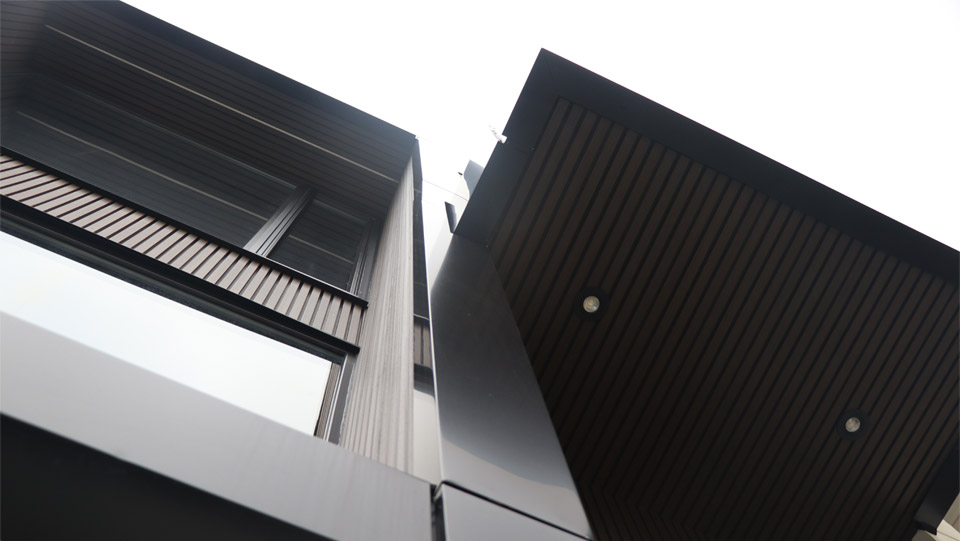

WPC wall panels are resistant to water and humidity, which has made them one of the most reliable cladding solutions in modern architecture. When installers and designers search for materials that truly perform in wet environments, the question often arises: Is WPC waterproof? The answer is yes,WPC is waterproof, and WPC is moisture resistant to a degree that far surpasses traditional wood-based panels. In environments like Toronto, where seasonal humidity, rain, and temperature changes are constant, choosing a material that can handle moisture is not just a preference but a necessity.
Why do WPC wall panels deliver outstanding protection against water and how do they work?! Let’s know…
Understanding the Nature of WPC Materials
WPC, or Wood Polymer Composite, is an engineered material created by blending wood fibers with high-quality polymers. This combination results in a composite that mimics the appearance of natural wood while gaining the structural advantages of synthetic material. Instead of absorbing water like traditional wood, the polymer structure blocks moisture, ensuring the panels do not swell, warp, or rot even when exposed to humidity or direct water.
How WPC Is Engineered for Moisture Resistance?
The unique manufacturing process creates a dense internal structure that eliminates microscopic gaps where moisture would typically infiltrate. Because the composite is uniform throughout, the entire thickness of a WPC panel maintains its resistance and not just the surface. This makes WPC wall panels suitable for long-term use in high-humidity environment exterior facades.
All About WPC fluted panels; an Amazing Idea for Exterior Cladding
Why Waterproofing Matters in Architectural Wall Cladding?
Water intrusion is one of the most damaging factors in any home. Materials that absorb moisture eventually weaken, deform, and decay. WPC wall panels offer complete protection from these issues by ensuring walls remain stable and intact, preserving both the structural integrity and visual appeal of the home.
Additionally in busy commercial buildings such as restaurants, hotels, offices, and retail spaces, moisture damage can lead to costly repairs and operational downtime. WPC’s waterproof properties reduce risk while providing a durable, low-maintenance finish that still meets modern design standards.
Are WPC Wall Panels Water and Moisture Resistant?
Yes, WPC wall panels are highly resistant to water and moisture. Their resistance comes from both the engineered material composition and the method of installation.
The Role of Material Quality and Formulation
High-grade WPC uses polymers that naturally repel water, preventing absorption even in constant humidity. Better formulations ensure that the wood fibers are fully encapsulated, reducing their exposure to moisture. This is why the quality of the product matters significantly.
Why Proper Installation Ensures Full Waterproof Protection?
Even the best WPC panels require expert installation to achieve complete resistance. Gaps, unsealed joints, or improper mounting can allow water to reach the wall behind the panels. Professional installers in Toronto understand how to install with precision, ensuring every seam, corner, and joint contributes to a perfectly protected surface. When material quality meets professional installation, you get a system that is genuinely waterproof and reliable.
Why Is WPC Waterproof?
These are the main reasons that makes wood polymer composite water resistant:
- The polymer component of WPC is inherently non-absorbent. It acts as a protective shield around the wood fibers, preventing moisture from entering the material. Unlike natural wood, WPC does not behave like a sponge. It remains stable, even when exposed to heavy humidity, steam, or rain.
- Because the wood particles are embedded within the polymer matrix, they do not expand when exposed to water. This means the panels stay perfectly shaped over time. The lack of swelling also prevents cracking, mold growth, and structural weakening that are the common problems in traditional wood products.
Is WPC a Good Choice for Humid Regions?
Regions with high humidity or heavy rainfall require materials that can survive constant exposure to moisture. Toronto, with its wet winters and humid summers, is a prime example of a climate where moisture resistance matters. WPC performs exceptionally well in these conditions because it doesn’t absorb water and maintains its structural integrity year-round.
Long-Term Durability in Wet Environments
WPC wall panels deliver consistent performance over many years, even in climates where moisture changes rapidly. Unlike wood or MDF, which degrade over time, WPC remains stable with minimal maintenance. This makes it a cost-effective and future-proof choice for homeowners and builders.
Moisture Resistance Level of WPC Wall Panels
In bathrooms, showers, kitchens, and laundry spaces,where steam is common, WPC panels maintain their shape and finish without swelling or peeling. Even in spaces where direct water contact occurs, properly installed WPC panels continue to block moisture penetration. This makes them ideal for both interior wet zones and exterior cladding.
Comparing WPC with Wood, MDF, and PVC Panels
| Feature | WPC Wall Panels | Natural Wood Panels | MDF Panels | PVC Panels |
| Water Resistance | Fully waterproof and moisture resistant | Absorbs water; prone to swelling and rot | Highly vulnerable to water; swells and disintegrates | Waterproof |
| Humidity Performance | Excellent in high humidity environments | Poor; expands and contracts | Poor; absorbs moisture easily | Good, but may deform in extreme humidity |
| Durability | Very high; resistant to impact, mold, and insects | Moderate; needs constant protection | Low to moderate; weak in humid climates | Moderate; can crack under impact |
| Maintenance | Minimal; no painting, sealing, or chemical treatment needed | High; requires regular sealing, painting, or varnish | Moderate; requires repainting and sealing | Low; easy to clean |
| Aesthetic Quality | Natural wood-like appearance; consistent finish | Authentic natural look | Smooth paintable surface | Plastic-like, less natural appearance |
| Lifespan | 20+ years with proper installation | 10–20 years depending on maintenance | 5–10 years | 10–15 years |
| Eco-Friendliness | Made from recycled wood fibers + polymers | Natural but contributes to deforestation | Not eco-friendly (resins, chemicals) | Synthetic, petroleum-based |
| Suitable for Wet Areas | Ideal for bathrooms, kitchens, basements, exteriors | Not suitable | Not suitable | Suitable but less durable than WPC |
| Installation Requirements | Requires professional installation for full waterproofing | Moderate difficulty | Easy to install | Easy to install |
| Cost Efficiency | High long-term value, low maintenance costs | High maintenance costs over time | Low initial cost, poor long-term value | Low initial cost, moderate durability |
Wood absorbs moisture and swells. MDF deteriorates when exposed to water.
PVC, while waterproof, lacks the structural strength and natural appearance that many designers prefer.
WPC stands at the intersection of durability, beauty, and high performance, making it a superior alternative to all three.
Is waterproof WPC a good choice for Canada?
Modern homes and commercial buildings in Toronto demand materials that balance beauty with practicality. WPC delivers both. Its wood-like appearance aligns with contemporary design trends, while its performance suits the climate.
Wallcent Is the Trusted Supplier and Installer
Wallcent specializes in high-quality WPC products and professional installation services. Their team understands the technical requirements of moisture-resistant installations and ensures every project delivers maximum durability. For those seeking WPC solutions in Toronto, Wallcent provides trusted expertise, premium-quality materials, and flawless execution.
conclusion
WPC wall panels are waterproof, moisture resistant, and engineered to outperform traditional wood-based materials in any environment where humidity or water exposure is a concern. Their unique composite structure ensures long-term stability, while proper installation guarantees complete protection against water penetration. Whether you’re renovating a bathroom, cladding an exterior wall, or designing a modern interior space in Toronto, WPC is a reliable and highly effective solution. With expert installation from Wallcent, you can enjoy a beautiful, durable, and maintenance-free finish that stands the test of time. When you choose WPC, you’re investing in both performance and peace of mind.
FAQs
Yes, WPC panels are engineered to be fully water resistant when installed correctly.
They are ideal for bathrooms because they resist steam, humidity, and direct water exposure.
No, the polymer components prevent rot, swelling, and mold formation.
Absolutely. WPC performs well in cold, wet, and humid weather conditions.
