
Acoustic wall panels are specialized architectural materials designed to absorb, control, and reduce unwanted sound inside a space. In modern architecture and interior design, noise control has become just as important as aesthetics, especially in commercial buildings, offices, restaurants, studios, and residential projects. Excessive echo and sound reflection can make spaces uncomfortable, reduce concentration, and negatively affect the overall user experience.
Today, modern acoustic cladding systems are designed not only for sound control but also for visual appeal. These panels are available in different materials, textures, and finishes that combine acoustic performance with contemporary architectural design. Whether in a luxury office, a home theater, or a public commercial space, acoustic wall systems help create quieter, more comfortable, and more functional environments.
What Are Acoustic Panels?
Acoustic panels are sound-absorbing wall or ceiling materials designed to improve the acoustic quality of a space. Unlike regular decorative wall finishes, acoustic panels are engineered to reduce echo, minimize sound reflection, and control reverberation. They work by absorbing sound waves instead of allowing them to bounce repeatedly across hard surfaces.
In modern architecture, acoustic panels are commonly integrated into interior wall systems, ceilings, feature walls, and decorative cladding designs. Many contemporary products combine acoustic performance with wood-look finishes, fabric textures, or slatted architectural designs to create visually attractive interiors.
The effectiveness of an acoustic panel depends on its material composition, thickness, density, and installation method. High-quality systems are designed to improve both sound clarity and overall comfort within the space.
What Is Acoustic Cladding?
Acoustic cladding refers to wall covering systems specifically designed to provide sound absorption and noise control while also functioning as an architectural finish material. Unlike standard wall panels that focus mainly on appearance, acoustic cladding combines decorative design with acoustic engineering.
These systems are commonly installed in spaces where controlling sound quality is important. Acoustic cladding can reduce noise transmission, soften harsh echoes, and create a more balanced acoustic environment. In commercial interiors, this helps improve communication and overall comfort for occupants.
Modern acoustic cladding systems are available in many forms including slatted wood panels, fabric-covered panels, perforated MDF systems, PET felt panels, and composite acoustic boards. Many architects now use these systems as both decorative and functional design elements.
5 things you should know before starting a renovation
Why Are Acoustic Panels Used?
Acoustic Cladding Systems Are Commonly Used for the Following Reasons:
Reducing Echo and Reverberation
One of the main reasons people use acoustic wall panels is to reduce echo inside a room. Hard surfaces such as concrete, glass, tile, and drywall reflect sound waves, causing excessive reverberation. This makes conversations unclear and creates uncomfortable noise levels.
Acoustic panels absorb these reflected sound waves and help create a calmer environment. The result is better speech clarity and improved acoustic comfort.
Improving Privacy
In offices, meeting rooms, and commercial spaces, acoustic panels help reduce sound transfer between areas. This creates more privacy during conversations and reduces distractions caused by surrounding noise.
Modern workplaces especially benefit from acoustic treatment because open-concept layouts often create sound control challenges.
Enhancing Audio Quality
Acoustic treatment is essential in spaces where sound quality matters. Recording studios, podcast rooms, home theaters, and conference rooms use acoustic cladding to improve audio clarity and reduce distortion.
Without acoustic treatment, sound reflections can interfere with speech and music quality. Properly installed acoustic panels create a cleaner and more balanced listening environment.
Creating More Comfortable Spaces
Noise pollution directly affects comfort, productivity, and even stress levels. Acoustic systems help create quieter and more relaxing environments in homes, restaurants, hotels, and offices.
In commercial architecture, better acoustic comfort often improves customer experience and employee performance at the same time.
Where Are Acoustic Panels Commonly Used?
The Buildings That Can Benefit from Acoustic Cladding are:
Offices and Corporate Spaces
Modern offices frequently use acoustic wall systems to improve concentration and reduce distractions. Open-plan workplaces often suffer from excessive noise because conversations, phones, and movement create constant sound reflections.
Acoustic cladding helps control these issues while also adding a modern architectural appearance to the office interior.
Restaurants and Cafes
Restaurants with hard surfaces often become extremely noisy during busy hours. Acoustic panels help reduce echo and create a more pleasant dining atmosphere for customers.
Many designers now integrate decorative acoustic slat panels into restaurant interiors to improve both aesthetics and acoustic comfort.
Home Theaters and Media Rooms
Home entertainment spaces require controlled sound quality for the best listening experience. Acoustic wall panels improve sound clarity by reducing unwanted reflections and balancing room acoustics.
This creates a more immersive movie and music experience.
Recording Studios and Podcast Rooms
Professional audio spaces rely heavily on acoustic treatment. Without proper acoustic panels, recordings may contain echo, background reflections, or uneven sound quality.
Specialized acoustic systems help create controlled recording environments with clearer audio performance.
Educational and Public Buildings
Schools, libraries, lecture halls, and public spaces often use acoustic cladding to improve speech intelligibility and reduce noise distractions. Better acoustics help improve communication and concentration in learning environments.
What Materials Are Acoustic Panels Made Of?
Modern acoustic wall panels are manufactured using different sound-absorbing materials. Each material has its own acoustic performance, appearance, and application advantages.
WPC fluted panel
WPC fluted panels can have acoustic properties, especially when they are designed with perforations or installed together with acoustic backing materials like PET felt or mineral wool. Many modern slat acoustic systems use WPC fluted profiles combined with sound-absorbing layers to improve both aesthetics and acoustics. So in architectural interiors, WPC fluted panels are often categorized as decorative acoustic wall systems.
PET Felt Panels
PET felt acoustic panels are one of the most popular modern acoustic solutions. These panels are often made from recycled plastic fibers and offer excellent sound absorption performance.
They are lightweight, durable, environmentally friendly, and available in many colors and patterns.
Wood Slat Acoustic Panels
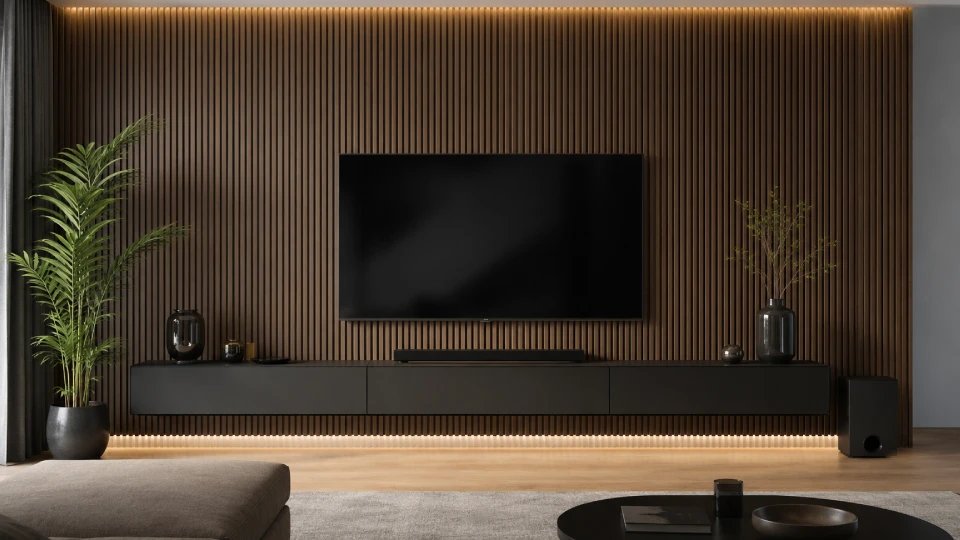
Wood slat systems combine decorative wood finishes with acoustic backing materials. These panels are extremely popular in contemporary architecture because they offer both acoustic performance and luxury aesthetics.
The slatted surface helps diffuse sound while the backing material absorbs noise.
Perforated ACM Acoustic Panels
Standard ACM panels are not acoustic materials, but perforated ACM systems combined with acoustic insulation can help reduce sound reflection in commercial and architectural applications.
Advantages of Acoustic Wall Panels
One of the biggest advantages of acoustic panels is improved sound comfort. Spaces with proper acoustic treatment feel calmer, quieter, and more professional. This directly improves user experience in both residential and commercial environments.
Another major benefit is aesthetic flexibility. Modern acoustic cladding systems are no longer limited to plain technical panels. Architects can now choose from decorative wood textures, modern slatted designs, fabric finishes, and custom architectural patterns.
Acoustic panels also improve productivity in workplaces. Reduced background noise helps employees focus better and communicate more effectively. In commercial spaces such as restaurants or hotels, better acoustics improve customer satisfaction and comfort.
Long-term durability is another important advantage. High-quality acoustic systems are designed to maintain their performance and appearance for many years with minimal maintenance.
Are Acoustic Panels Only for Soundproofing?
No. This is one of the most common misconceptions about acoustic panels. Acoustic treatment and soundproofing are not exactly the same thing.
Acoustic wall panels mainly improve sound quality inside a room by reducing echo and reverberation. They absorb reflected sound waves within the space itself. Soundproofing, on the other hand, focuses on preventing sound from traveling between rooms or through walls.
Many modern acoustic systems help with both functions to some degree, but their primary role is improving interior acoustic quality rather than complete sound isolation.
How to Choose the Right Acoustic Panels?
Choosing the right acoustic system depends on the type of space, noise level, design goals, and budget. For offices and commercial interiors, decorative slat acoustic panels are often popular because they combine modern aesthetics with strong sound absorption.
For recording studios or theaters, higher-performance acoustic systems may be required to achieve precise sound control. In restaurants and hospitality spaces, designers usually prioritize a balance between acoustic performance and interior appearance.
Material quality is also important. High-density acoustic cores and professionally engineered backing systems generally provide better long-term acoustic performance compared to low-cost decorative products.
Professional installation also plays a major role. Incorrect panel placement can reduce acoustic effectiveness significantly. Proper spacing, wall positioning, and room analysis help maximize performance.
Are Acoustic Panels Worth It?
For most modern interior spaces, yes. Acoustic panels provide both functional and visual value. In many buildings, poor acoustics create constant discomfort without occupants fully realizing the cause. Excessive echo, noise reflections, and unclear conversations can negatively affect productivity and comfort every day.
Acoustic wall systems solve these problems while also improving architectural aesthetics. Whether for a luxury office, modern restaurant, home theater, or residential feature wall, acoustic cladding creates a more refined and comfortable environment.
In high-end architectural design, acoustic treatment is no longer considered optional. It has become an important part of creating functional and professional interior spaces.
The end…
Acoustic wall panels are modern architectural solutions designed to improve sound quality, reduce echo, and create more comfortable interior environments. From offices and restaurants to home theaters and commercial buildings, acoustic systems help control noise while enhancing interior design aesthetics.
Today’s acoustic cladding products combine advanced sound absorption technology with modern decorative finishes, making them both functional and visually attractive. Materials such as PET felt, wood slats, perforated MDF, and fabric-wrapped systems offer different levels of acoustic performance depending on the project requirements.
For architects, homeowners, and commercial property owners, acoustic panels are one of the most effective ways to improve interior comfort, communication quality, and overall user experience.
FAQs About Acoustic Cladding
Acoustic wall panels are used to absorb sound, reduce echo, and improve acoustic comfort inside a space.
Not completely. Acoustic panels mainly improve sound quality within a room rather than fully blocking sound transmission.
They are commonly installed in offices, restaurants, studios, theaters, conference rooms, and residential media spaces.