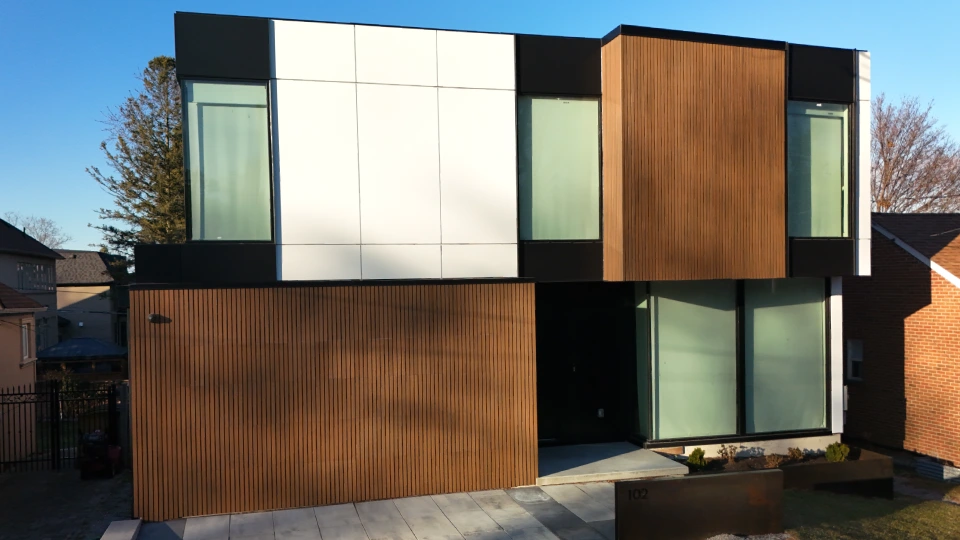
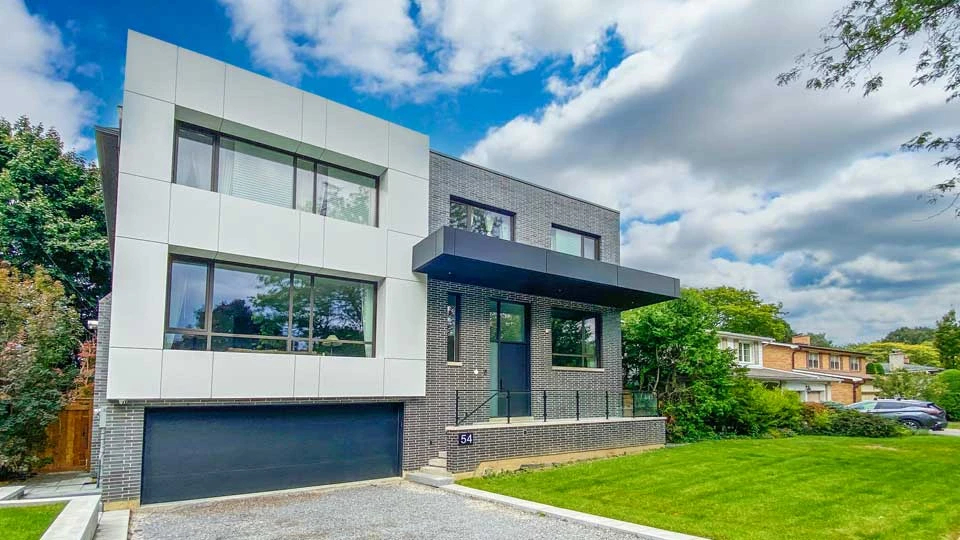
When property owners, developers or architects compare exterior cladding systems, one of the most common questions is: Are ACM panels more expensive than other exterior panels?
The accurate answer is that ACM panels are not inherently more expensive than other high-performance cladding systems. However, they can be more expensive than basic or low-grade exterior panels depending on material quality, fire rating, coating system, fabrication complexity, and compliance requirements. Pricing differences are primarily driven by raw material quality, fire performance, structural integrity, and long-term durability- not simply the panel category or brand.
In this article, we examine whether ACM panels truly cost more, why price differences occur, and how lower-priced options compare to premium systems.
Understanding ACM Panels in Exterior Cladding
Aluminum Composite panels consist of two aluminum sheets bonded to a core material, typically polyethylene (PE) or a fire-retardant mineral-filled core. They are widely used in commercial buildings, high-rise residential projects, retail façades, and modern residential architecture due to their lightweight nature, clean aesthetics, and engineered performance.
When compared to other exterior panels [such as fiber cement, solid aluminum, high-pressure laminate (HPL), insulated metal panels (IMP), or natural stone] ACM panels fall within a broad pricing spectrum depending on performance specifications.
Entry-level ACM panels may be more affordable than solid aluminum or stone but can be more expensive than vinyl siding or basic fiber cement boards. High-quality, fire-rated ACM panels may approach or exceed the cost of some alternative façade systems.
The key question is not whether ACM panels are expensive, but how their cost compares to the level of performance they provide.
Why Do ACM Panels Sometimes Cost More?
Price variation in ACM panels is primarily influenced by engineering specifications, compliance standards, and manufacturing quality.
Material Composition and Core Technology
The core material is a major cost factor. Standard PE cores are less expensive but offer minimal fire resistance. Fire-retardant (FR) and non-combustible (A2-rated) cores include mineral fillers that significantly reduce combustibility.
In some regulated markets (such as Canada) fire code compliance for mid- and high-rise buildings is strict, requiring higher-performance cores and certified testing, which increases cost. By contrast, materials like fiber cement are inherently non-combustible but lack the same design flexibility and precision.
Aluminum Thickness and Structural Integrity
ACM panel pricing is also influenced by aluminum skin thickness. Thicker aluminum improves rigidity, dent resistance, and long-term flatness. Lower-cost panels often use thinner skins, which may lead to deformation or reduced lifespan.
Higher-grade ACM panels are manufactured with tighter tolerances and stronger bonding processes, resulting in better performance under wind loads and temperature fluctuations.
Coating Systems and UV Resistance
The coating system significantly affects both price and longevity. High-performance PVDF coatings offer superior resistance to UV exposure, fading, and weathering.
Lower-cost panels may use polyester coatings, which degrade faster and increase maintenance requirements. While premium coatings increase upfront cost, they reduce long-term maintenance and replacement expenses.
Fabrication and Installation Systems
ACM panels are often custom-fabricated using CNC routing and folding to create cassette systems with concealed fasteners. This method improves precision and aesthetics but adds to fabrication and installation costs.
Simpler panel systems, such as face-fastened fiber cement boards, are less expensive to install but may compromise visual consistency and long-term performance.
Are Cheap ACM Panels Different from Premium Systems?
Yes often significantly.
Fire Rating and Compliance
Not all ACM panels offer the same fire performance. Lower-cost panels typically use standard PE cores, while premium systems incorporate fire-retardant or non-combustible cores with certified testing.
Durability and Weather Resistance
High-quality ACM panels are engineered to resist delamination, moisture infiltration, and thermal expansion. Cheaper panels may fail prematurely due to weaker bonding between layers.
Surface Finish and Color Retention
Premium ACM panels maintain color consistency for decades due to advanced coating systems. Lower-grade alternatives may fade or chalk within a shorter timeframe.
Manufacturing Quality
Reputable manufacturers follow strict quality control processes, ensuring consistent thickness, flatness, and bonding strength. Lower-cost panels may show inconsistencies that affect installation and appearance.
How Do ACM Panels Compare to Other Exterior Panels in Cost?
In general:
- Vinyl siding is typically the least expensive
- Fiber cement panels fall into a moderate range
- ACM panels sit in the mid-to-upper range depending on specifications
- Wood polymer composite and insulated metal panels can align with or exceed ACM pricing
- Natural wood, Stone and solid aluminum are usually more expensive
ACM panels are therefore not the cheapest option, but they are also not the most expensive when compared to architectural-grade façade systems.
Is the Higher Cost Justified?
Cost should be evaluated based on lifecycle value rather than initial price alone. High-quality ACM panels offer:
- Lightweight structural efficiency
- Reduced substructure requirements compared to heavier materials
- High design flexibility
- Low maintenance needs
- Long-term visual consistency
These factors often make ACM panels a cost-effective solution over time, particularly in commercial and large-scale projects.
Market Reality; Quality Drives Price
In regulated construction environments (such as Canada) material quality, fire ratings, structural performance, and environmental resistance significantly influence pricing. While this increases upfront costs, it ensures compliance, safety, and long-term reliability.
If an ACM panel is significantly cheaper than the market average, it often reflects compromises in core composition, coating quality, or certification.
Making the Right Exterior Cladding Decision
Choosing between ACM panels and other exterior panels requires evaluating:
- Building height and type
- Fire safety requirements
- Climate exposure
- Structural performance needs
- Aesthetic goals and budget
ACM panels are not just a decorative element; they are part of the building’s performance envelope. When properly engineered and installed, they provide a balance of durability, safety, and design flexibility.
For property owners navigating a complex cladding market, focusing on certified quality and system performance is far more important than simply selecting the lowest upfront cost.
In the end; The real distinction lies in quality. High-grade, certified ACM panels deliver strong long-term value, while cheaper alternatives may introduce performance risks.