ACM panels in commercial buildings have become one of the most widely used solutions in contemporary architecture, especially for projects that demand a combination of durability, modern aesthetics, and cost efficiency. The use of ACM panels for commercial cladding allows architects and developers to create visually striking facades while maintaining structural performance in demanding environments. In cities like Toronto, where commercial buildings must withstand temperature fluctuations, moisture, and urban pollution, selecting the right façade material is critical. The growing popularity of ACM panel for commercial building facade systems is not accidental; it is the result of a balance between engineering performance and design flexibility. This article explores in depth why ACM panels are suitable for commercial projects, how they are best used, and what design strategies maximize their impact.
What are ACM panels and why are they used in commercial buildings?
Aluminum Composite Material panels consist of two thin aluminum sheets bonded to a non-aluminum core, creating a lightweight yet rigid panel. This structure allows ACM to maintain strength while remaining easy to fabricate and install. In commercial construction, this balance is highly valuable because it reduces structural load without compromising durability.
ACM panels are widely used in commercial buildings because they provide a smooth, uniform surface that can be manufactured in a wide range of colors, finishes, and textures. Whether the design requires a matte, glossy, metallic, or even wood-like appearance, ACM panels can deliver consistent results across large façade surfaces. Their resistance to corrosion, UV radiation, and environmental wear makes them particularly suitable for long-term exterior applications.
Advantages of ACM panels for commercial cladding
One of the most important advantages of ACM panels is their lightweight nature, which simplifies installation and reduces structural stress on the building. This makes them ideal for both new construction and renovation projects. Despite being lightweight, ACM panels offer excellent rigidity and dimensional stability, ensuring that the façade maintains its form over time.
Another major benefit is design flexibility. ACM panels can be cut, bent, and shaped into complex forms, allowing architects to create unique and dynamic facades. This flexibility is especially important in commercial architecture, where visual identity plays a key role in branding and attracting attention.
ACM panels also offer strong resistance to environmental factors. They perform well under exposure to rain, snow, and sunlight, making them suitable for climates like Canada’s. Additionally, their smooth surface makes cleaning and maintenance relatively simple, which is an important consideration for large commercial properties.
ACM panels best used in commercial buildings
ACM panels are particularly effective for building facades, storefronts, corporate offices, shopping centers, and hospitality environments. Their clean and modern appearance helps create a professional image, which is essential for commercial spaces. In retail applications, ACM panels are often used to highlight entrances, signage areas, and feature walls, enhancing visibility and brand recognition.
They are also commonly used in façade renovation projects. When updating an older building, ACM panels provide a fast and efficient way to modernize the exterior without extensive structural modifications. This makes them a practical solution for improving both appearance and performance in existing commercial properties.
Best design approaches for ACM panel facades
The true strength of ACM panels lies in their versatility in design. Different approaches can be used depending on the desired architectural effect.
Using a combination of dark and light colors
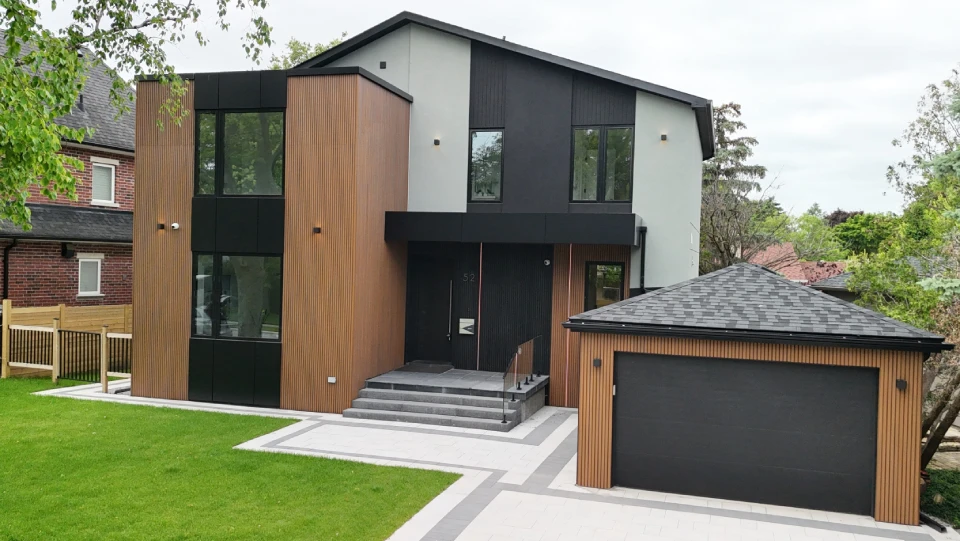
One of the most effective design strategies is combining dark and light ACM panels to create contrast. This approach helps define different sections of the building and emphasizes architectural lines. For example, darker tones like black ACM panels can be used to frame entrances or highlight vertical elements, while lighter shades can be applied to larger surfaces to maintain brightness. This contrast adds depth and visual interest to the façade, making the building more dynamic and engaging.
Using a single dark color for a bold and modern look
A monochromatic dark façade creates a strong, sophisticated identity. Colors such as charcoal, black, or deep grey are often used in modern commercial buildings to convey a sense of luxury and professionalism. This approach works particularly well for corporate offices and high-end retail spaces where branding and visual impact are essential. However, careful attention must be paid to lighting and surrounding context to avoid making the building appear too heavy or closed.
Using a single light color for a clean and minimal appearance
Light-colored ACM panels create a bright and open visual effect. Shades like white, silver, or light grey are commonly used in commercial buildings that aim for a minimalist and contemporary design. These colors reflect light effectively, making the building appear larger and more inviting. This approach is often used in healthcare facilities, educational buildings, and modern office spaces where clarity and simplicity are important.
Combining ACM panels with other materials
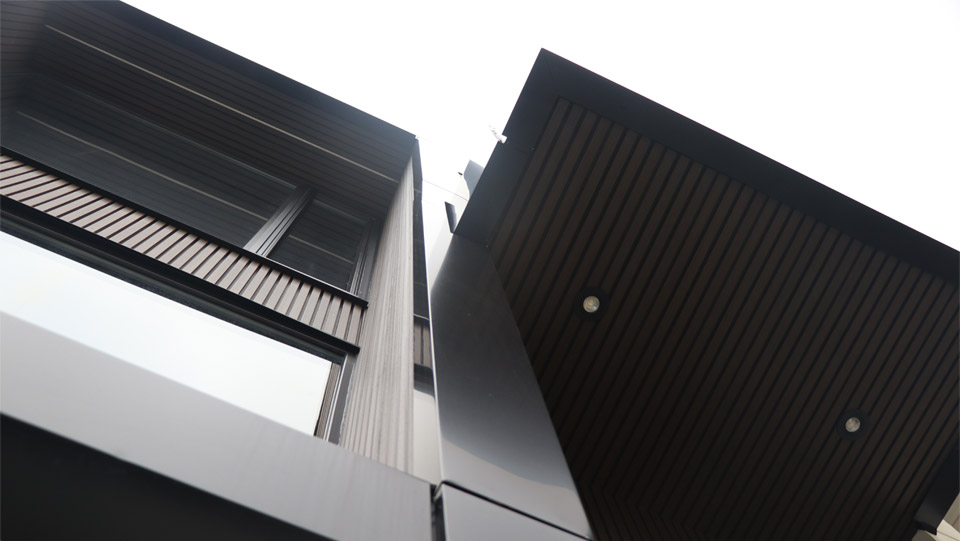
Another powerful design strategy is integrating ACM panels with other façade materials such as WPC, glass, or stone. This combination allows architects to balance textures and create a more layered and sophisticated appearance. For example, ACM panels can be used for large structural surfaces, while WPC elements add warmth and natural character. Glass can enhance transparency and light, while stone provides a sense of solidity and permanence. The key is to maintain harmony between materials so that the overall design feels cohesive rather than fragmented.
Important considerations when using ACM panels in commercial projects
While ACM panels offer many advantages, proper installation and detailing are essential to achieve optimal performance. Expansion gaps must be carefully planned to accommodate thermal movement, and substructure systems must be designed to provide adequate support and ventilation. Poor installation can lead to issues such as panel distortion or water infiltration, which can affect both performance and appearance.
Fire safety is another important consideration. Depending on building regulations in Canada, specific types of ACM panels with fire-resistant cores may be required for commercial applications. Ensuring compliance with local codes is essential for both safety and legal approval.
Maintenance and long-term performance
ACM panels are known for their low maintenance requirements. Regular cleaning with mild detergents is usually sufficient to maintain their appearance. Their strong resistance to corrosion and UV radiation ensures that the color and surface quality remain stable for many years. This makes ACM panels a cost-effective solution over the lifespan of a commercial building.
Conclusion and practical recommendation
ACM panels are one of the most versatile and reliable materials for commercial building facades. Their combination of lightweight structure, durability, and design flexibility makes them suitable for a wide range of applications, from modern office buildings to retail environments and large-scale commercial complexes. By using thoughtful design strategies such as color combinations, material integration, and proper installation, architects can maximize both the visual and functional benefits of ACM cladding.
For commercial projects in Toronto, working with experienced professionals is essential to achieve the best results. Companies like Wallcent, with expertise in façade systems and material integration, can provide valuable guidance in selecting, designing, and installing ACM panels for long-term performance and architectural impact. If you are planning a commercial building façade, choosing the right material and the right team will define the success of your project.